Megalosaurus
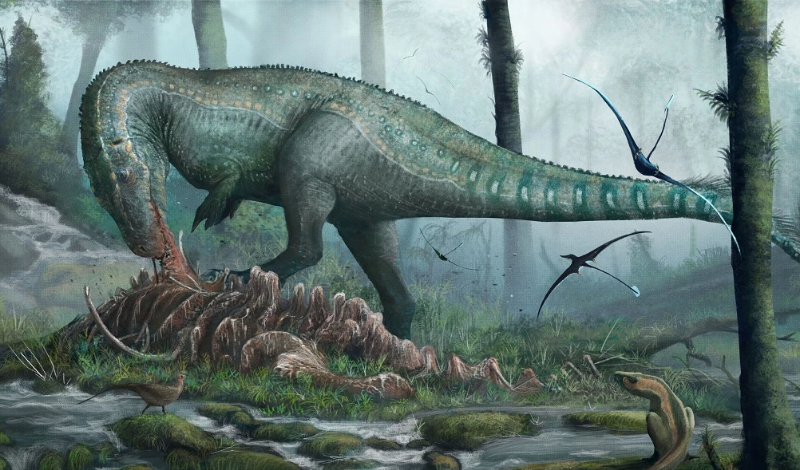
Name Meaning: "large lizard" / Location: United Kingdom (England) / Time Period: c. 166 million years ago (Middle Jurassic) / Length: 20 - 25 ft (6 - 7.5 m) / Weight: 1 ton (950 kg) / Locomotion: Biped / Diet: Carnivore / Described: 1824 (Buckland) / Geological Formation(s): Taynton Limestone / Valid Species: Megalosaurus bucklandii (type)
Phylogeny: Dinosauria > Saurischia > Theropoda > Neotheropoda > Tetanurae > Megalosauroidea (?) > Megalosauridae > Megalosaurinae
Overview: Fossil remains later attributed to Megalosaurus had been known to English academics since the 1600's, but were scant and mistaken for remains of Roman war elephants or giant humans. More fossils would be uncovered, leading to its 1824 description, published by the theologian and naturalist William Buckland. Its name, meaning "great" or "large lizard" of course refers to its size, though we know today there were many far larger theropod dinosaurs. Megalosaurus is considered to be the first validly described non-avian dinosaur genus. Indeed, it was named before the concept of the Dinosauria even existed. In 1842, the famed naturalist Richard Owen used Megalosaurus (along with Iguanodon and Hylaeosaurus) to establish dinosaurs as a taxonomic clade, distinguishing them from other large prehistoric reptile groups like the mosasaurs or plesiosaurs.
Early restorations of Megalosaurus depicted it as a bulky, quadrupedal creature. Its remains were incomplete and scientists had yet to learn that theropod dinosaurs were bipeds. Modern depictions restore it as a largely "stereotypical" large-bodied theropod. It had a large head with fairly long jaws. The arms weren't overly long, but were probably quite powerful, each hand equipped with three large claws. Megalosaurus appears to have been the largest predator in its local environment. Potential food sources included long-necked sauropods like Cetiosaurus. This genus acts as the namesake of the larger family Megalosauridae, which also contained notable dinosaurs like Torvosaurus and Eustreptospondylus. These animals saw their greatest success during the Middle to Late Jurassic. Known fossils include parts of the jaw and skull, the pelvis, limb bones and some vertebrae.